

I love birthdays
Susan got me an iRiver MP3/OGG player for my birthday. It is awesome.
Busy days yesterday and today. Just after I wrote my last log entry, I practically blew away the database on the jonobacon.com server when I was messing around with some MySQL configuration. All is sorted now, and I won’t be doing that again. Phew! 🙂
I booked my tickets ready for my trip to London tomorrow to the Voluntary & Community Sector Open Source Meze. I am taking my camera down too, so I should get a load of pictures of the event. It is an early start and my train is at 6.49am from Wolverhampton. Ugh. I do love going to things like this, but getting up early sucks like never before. I will be opening the day up and sitting on a closing panel at the end of the day. Should be fun.
Speaking of events, I booked the LUG faithful in at our regular expo visiting hotel in London. We are now all ready to roll for Linux World in London. That is going to be a great trip. I am also doing a talk there, rather ominously wedged in between Jeremy Allison and Matthias Ettrich. Hrm, that should be, er, fine. No, not worried, er, at all. 🙂
The other trip I am organising is when Jon and I head over to the ‘dam to go to the wonderful Blender Conference. That is gonna be great. Another talk is scheduled and I am looking forward to finally meeting Ton. I wanted to go last year but never sufficiently got around to it.
Oh, while I am on here, thanks must go out to Jeff Waugh, Aaron Seigo, Waldo Bastian and Daniel Stone. Cheers guys.
Right, I am off to eat some dinner…

Watch it go
Well, well, well, my most recent article for the O’Reilly Network called Improving Linux Driver Installation seems to have caused a bit of a stir across the ether. The story has been linked on Slashdot (link), OSNews (link), Linux Weekly News (link) and trackbacked from various blogs.
Since the article hit the wire, I have tried to keep up with as many comments as I can, and from what I have read it seems that a good many users agree with the article and the issue. There have naturally been some comments that disagree with binary module compatibility and even Project Utopia. It also made me chuckle that the usual raft of I hate Windows, I hate everyone comments made it in – particularly on Slashdot (heck, that was a surprise).
With this interesting range of comments there does seem to be quite a serious issue here, and it is an issue which really is going to plague desktop Linux. A number of people made a number of interesting points, and I have not got time to go and reply to them all, so I thought I would make some comments here about some of the issues raised. Here we go:
- About binary compatibility being bad – I always find this an interesting one, as many people seem to hook into the binary-support-is-bad-in-every-case view. If we are talking about free software, binaries that are built from free software code are still free software – they are free entities derived from free code. Refusing to support them seems a little simplistic – just because someone could potentially create a closed source binary and run it on Linux is not enough of an excuse to support them for me. If there is such a concern against closed sourced commercial software, re-license the kernel so you can’t run any commercial software on it.
- About Linux not copying what Windows does – This issue is not something that just affects Linux, and this is not something that is exclusive to Windows. This is about usability, and I am sure that Joel Spolsky would consider the device driver issue a pretty serious usability problem. If we are to be accused of copying the Windows way of doing things just because we want success on the desktop, we need to bear in mind that we are talking about being an alternative. Not everyone who wants to use Linux wants to compile everything and have to fight with the OS to get even the most simplistic things working. This is why Project Utopia is good, and this is why Driver On Demand could be even better in my view. Another point made by some contributors was that we are gonna stamp on Windows anyway and we should not worry about pithy details such as this. I don’t think we should be so confident – until we have resolved issues such as device driver usability and some other usability quirks, we still have an uphill battle to get our beloved OS on the desktop. I am sure it will happen one day, but we need to arm ourselves from every possible angle and not simply get complacent.
- About the driver driver concept – One idea mentioned on OSNews was that we should have some from of driver driver that retains ABI compatibility but tracks kernel changes. This would possibly provide support for loadable binary drivers but still provide a consistent interface for driver developers. I think this is a great idea and certainly worth exploring. This could resolve many of the issues we are facing with this particular problem. Any kernel hackers care to comment on the technical potential for this concept?
All in all, there has been some great discussion with this issue. One thing I should point out is that I am certainly not trying to drive a stake into the kernel community, but issues such as this are clearly concerning a number of users and distributors. If we want the world domination everyone talks about, we need to resolve as many of these problems as possible. I am no kernel hacker, but as a writer I can write about the issues to raise the profile so people have an opportunity to discuss things. I think the true value in articles such as this are the comments – they often extend the article to represent a true balance of the issue augmented by technical suggestions.
In other news, the brand new Seraphidian album is complete and we finished mixing it yesterday. I don’t want to blow our own trumpet but I am so proud of it. It is heavy, defined and accessible. It contains 7 tracks which are:
- Stomp
- Caged
- Reanimate
- Forsaken
- To the end
- Skull
- Broken Glass
The album is entitled ‘Caged’ and will be released on Sat 30th October 2004 at our release party at the Planet in Wolverhampton, UK. The album will also be available for sale on the Seraphidian website for purchase with PayPal or credit cards. We are currently in the process of talking with a few labels regarding the band – I will keep you informed. 😉
—–
There must be a better way
I am pleased to see that my talk has been finalised at the Blender Conference 2004 in Amsterdam. I am heading over there with my buddy Jon Leek and t’will be fun. I have added the talk to my Speaking Events page and it is on the front page of jonobacon.com toon the Events block.
An article I wrote a little while back has now been published over on the O’Reilly Network. The article is called Improving Linux Driver Installation and refers to the problems with driver support from a regular user’s standpoint. I was pleased to have David Zeuthen, the main man behind HAL comment on the issues and be involved in the article.
This whole issue of device drivers in the kernel is starting to get pretty ugly. As I mentioned in a previous post, there has been a problem with a Phillips webcam driver and the author said he wanted to remove it from the kernel. From some subsequent discussions it seems that Alan Cox is now looking after the driver, and some of the discussion on the kernel mailing list has been rather firey. A pretty good summary of what happened is over on kerneltrap.org and you can see how things are getting a bit crazy. As I keep banging on about on my blog, the problem is that the kernel is becoming a bit of a hog when it comes to managing all of the these drivers. This is great for system builders, but if desktop Linux is ever going to get anywhere, this needs to be resolved soon. If we are not careful, the kernel is going to go the same way as the KDE Control Center – an over inflated mess that is complex in every way other than its simple ability to be complex. I get the impression that some of the kernel hackers are shutting their eyes to the issue and singing lalalala. Is this the case? What do you all think?

Loud noise is good for you
You may be wondering why there has been a distinct lack of updates all week. Well, this has been because I have been in the studio with my band (Seraphidian) recording our debut album. It has been a series of long 12 hour days, but we have now completed principle tracking. This has included all the drums, bass, guitars and vocals. I think my most difficult day was when I was tracking the vocals – giving 100% in the style of music that we play is pretty difficult, and it was a long and hard day.
Despite this hard work, the album is sounding great. The production quality is incredible and Gav Monahan (our producer) has done a sterling job so far in getting some great quality tracks recorded. Everyone in the band has worked their arses off to give their very best performances, and we are looking forward to mixing the album at the weekend. After that it will be a case of getting the artwork sorted out and preparing for our launch party on Sat 30th October at The Planet in Wolverhampton. Thanks for all the kind emails in support of the album – I can’t wait for you all to hear it. 🙂
Anyway, what has been going on elsewhere? Well, due to me spending most of this week in a darkened room playing a guitar and screaming into a microphone, I am still catching up on most of the news. This has involved a hefty amount of mail and blog reading to try and get up to date on what everyone is doing. I also have a big chunk of code to compile and test. One of the problems with reading so many mailing lists, blogs and other online content is that when you are away for a few days you end up dedicating an entire day to sifting through all the content. Nevermind.
Zak got in touch with me the other day regarding a new community advocacy project that we were discussing. This project is currently a closed mailing list with specific invitees, and the project is aiming to help push Open Source though various channels. This has involved some respectable names getting involved with project, and I am looking forward to contributing to it. I think there is a great potential for some good work. Zak is unrelentingly dedicated to this area of Open Source and I am looking forward to working alongside him and the others. We are currently just waiting for the other members to sign up before we get started.
Last night was a big Wolves LUG meet in which a number of people showed up and the Perl Mingers came along. We were pretty much a capacity crowd last night and could barely fit inside the restaurant where we meet. I think we are going to need to seriously look for an alternative venue to meet at. In any case, the local council are knocking our beloved eating place down in favor of a snazzy new shopping area that is likely to be populated by baseball cap wearing trendies who frighten old ladies and joyride when not working at McDonalds. Don’t trust these people. 😛
Oh, and next week I am doing a talk at the Voluntary & Community Sector Open Source Meze in London. It would be great to see some of you there.
—–
Arthur’s bench
Today has been one of those days where my brain has been in about ten places at the same time. On one hand, I have been thinking about the work I need to do, on another hand I have been thinking about desktop usability, on another freakish third hand I have been thinking about desktop usability and on an even freakier fourth hand (with two thumbs) I have been thinking about the impending album recording over the next four days. My band, Seraphidian, who caters for those who like to bang their heads, mosh, and play copious amounts of air guitar are about to record our first full length studio album entitled ‘Caged’. We are going into the studio on Saturday, Sunday, Monday, Tuesday and then mixing the following Saturday and Sunday with a gig wedged in between. We have been practicing and we are toned and ready to roll. Bring it on. 🙂
Last night I got my head into Joel Spolksy’s User Interface Design For Programmers. You know, I have only been reading it for a few hours, but I am really impressed with it so far. I have never read Joel’s books before, and it is both entertaining and interesting. As with any kind of usability writing, the clues are often in the questions and it is merely a case of training your eyes to see the usability constructs, but it is interesting nonetheless – particularly when humor is applied. One part of the book that I have found impressively amusing is Spolsky’s rambling diatribe on his hatred towards the Windows help database rebuilding dialog/wizard hybrid. You can tell that when Spolsky originally saw this travesty of user interface reckoning in Windows that he was literally bleeding from his eyelids with anger. I look forward to cracking on with it over the next few days to hear more of Spolsky’s interesting thoughts.
Speaking of usability, there were some interesting comments made to the previous blog entry about the crazy world of Open Source file pickers. Nordle kicked off with some interesting comments about whether convergence is such a good thing. Nordle made a good point with the sentence, “One persons continuity is anothers limitation of choice“. I think this is one of those Catch 22 situations in the Linux and Open Source world – how can you make constructive decisions without invading someones idea of freedom. The natural solution would be to make the convergence optional, but then again, this is not really convergence and it would relegate the software to being Just Another Library (TM) with possibly Just Another Sourceforge Page (TM). Schwuk struck the other chord and posted to his blog about this subject. He pretty much sums up the post with:
“So, getting back to Jono’s idea, if there was an interface that would allow me to call the common dialogs of whichever DE my application was running in, I would use it. This shouldn’t just be a purely technical solution though – maybe freedesktop.org could produce some sort of meta Human Interface Guidelines to help educate people.”
This is exactly the approach I want us to take. We need to create a technical solution that can provide some form of middle ground to help people fit their application into the native desktop as easily as possible, but we also need a strong educational solution to make free software hackers hack their software so it is HIG compliant. This compliance is where distribution sheen is really applied to a distribution, and this is the most important facet distribution design and marketing. Users should not install software on their systems unless it is designed to work with their distribution, and part of this is in ensuring that the software can properly integrate with it. To integrate this efficiently, the distributor would really need to ensure that some QA has been applied so the confidence in the distribution and application knitting together is complete. The trick is in ensuring that the QA process is open and modular – how easily can a distributor pull open the bonnet of the application, shift around the interface, adjust dependencies and otherwise customise the software so it works well with their distribution. More importantly, how often should the distributor need to do this – surely we can automate this somehow? These are important issues we need to think about, and this lack of native desktop integration is a core challenge. I am sure there is a solution out there – we just need to pull like minds together to find it.
As some of you will be aware, I tend to make various predictions and share different ideas on my blog, and I want to make a key prediction here; one that I have been rattling on about elsewhere. Here we go: I have no doubt in my mind, not a single shred of insecurity in the fact that Blender is going to have a huge and dramatic impact on pushing Open Source and free software in the commercial sector. The reason I am so confident in Blender is combined from a few different considerations. Firstly, Blender is enjoying an impressive amount of re-development and work on the part of the hackers. This has resulted in some pretty impressive and powerful features that are being implemented into Blender to bring the functionality up to a professional grade. There have been various utterances in the Blender community from professional 3D studios about how they are keeping a beady eye parked in Blender’s general direction, and this can only be a good thing. The main reason why I think that Blender has such a bright future though, is because of how it is managed. The entire project has the Blender Foundation to represent an official side to the effort, but the unrelenting dedication of its author and leader, Ton Roosendaal, is the key reason why Blender is pushing forward. If you look at the well managed Open Source projects, they generally enjoy a better success rate in different sectors than non-efficiently managed projects. Examples of good management includes Mozilla, Scribus, KDE, GNOME, GnomeMeeting and others. The difference with Blender and Mozilla specifically though, is that these projects have a particularly polished and focused PR side. This spit and shine really helps with the commercial adoption and subsequent patches from the commercial sector.
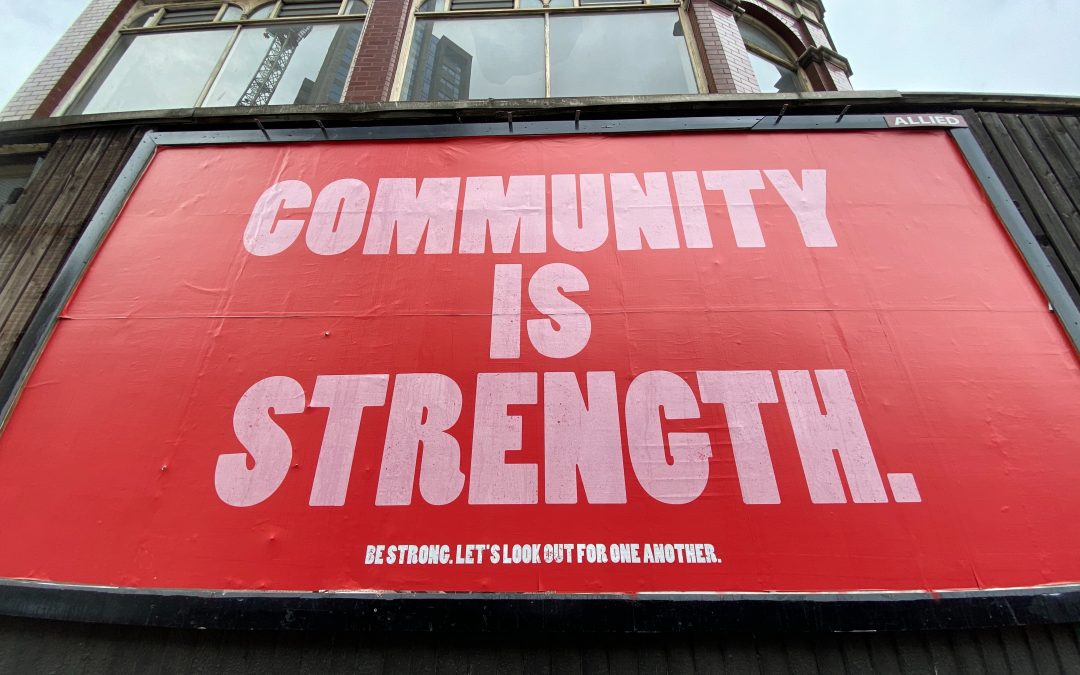
A final reason why I think Blender is going to be incredibly successful is the mere fact that it provides a creative platform; people can be creative with it and express themselves, and this brings a sense of unlimited potential with the software. You only have to look at some of the incredible work being created with Blender to see that it is a platform that people care about. I think that users of software need to feel that the tool is an extension of their creative side, and the fact that Blender is Open Source means that the software takes on the persona of Arthur’s bench in Eastenders. For those people unfamiliar with Eastenders, Arthur Fowler was a well respected chap in Albert Square (where the show is set). When he died in the show, a commemorative bench was made to remember him, and people look after the bench to ensure that his memory stays alive. The point is that the bench serves a purpose for the people in Albert Square (to sit on), but because there is an emotional connection to it (in the same way the creative people get emotionally connected to the creative tool that is their creative extension), there is a sense that people should care for it. I believe it is this primal sense of respect that is going to help push Blender and other Open Source software forward – with Open Source, it is not just software, it is community.
File picking pickle
Last night I signed up to a couple of freedesktop.org mailing lists that I have been meaning to get on for a while. This was the general freedesktop list and the xdg list. The idea that has been spinning around my head that prompted me to join was the problem of applications not looking native in the desktop that they are run in. This was the issue that prompted my article The path to unified interaction – we need to figure a way out of these problems.
Anyway, I joined the xdg list and sent an initial mail out introducing myself and explaining the problem that I think we need to discuss. Today there has been some good responses posted to the list and a combination of skeptical and positive views. The idea that I was proposing was some kind of middle-ware library that could act like ye’ old telephone operator and connect the native dialog box to the application. Mike was pretty convinced that this would be a real problem to code due to the differences between the GTK and Qt implementations of file pickers. This has now pushed the conversation forward to discuss other potential ideas to resolve the issue.
One thing that should be stressed is the extent of the problem. Take a look at the image below – I have been through a bunch of KDE and GNOME applications and taken a screenshot of the different file picker dialog boxes. This pretty much shows the kind of UI mangle that we are in:
Here we have a huge array of file open dialog boxes. Each box serves a generic use for the application to allow the user to pick a file, but the lack of consistency means that a user who wants to use Firefox, Scribus, KWord, GIMP, Quanta and GEdit (a reasonable range of tools) will need to understand all of these different file pickers. It seems to me that we need to discuss a suitable solution that can be merged into the freedesktop.org platform. Distributions are moving to only supplying one tool instead of seven tools for a job (six of which often don’t work very well), and there is a possibility that software with a freedesktop.org seal of compliance could get pushed to the top of the pile. I am sure most major applications would consider standardising on freedesktop.org as a platform.
On one side of the fence we have horrific differences in usability such as the dialog boxes outlined above, but in other areas, applications are fairly similar and do not create such severe usability issues for the user. Take the following image for example:
Here I have taken three different web browsers and identified their menu and toolbar structure. Aside from some general differences in visual look (many of which could be resolved with themes), the actual structure of the interface is very similar. There are certainly problems with different label names, but the similarities between these applications is hearteningly similar. Obviously other tools will vary, but so long as the core constructs of the applications are fairly similar, some form of hack could be built to allow for some consistency across desktops. I am not interested in asking everyone to change their toolkit or change their way of working dramatically, but I think we need to determine our options and see where we stand.
What do you think people?

Kernel usability
Another crazy few days packed with busyness and topped off with a little breathlessness.
A new issue of Linux Format dropped on my door and there is a stack of my content in there this month. Cool. The bundled Linux Pro magazine also features another two articles, one of which being a cover feature on the use of Linux at Speedy Rentals. This implementation was done by Clockwork Software in Sutton Coldfield. Strangely enough, I went down to see them today to discuss a few things and it was good to see Kat and John. They are doing some great work over there.
For those who don’t keep their beady eyes on the O’Reilly Network, I had an article called Alleviate RSI the Hacker Way published a few weeks back. I had been wanting to write an article on RSI for a while as there seemed to be very little in the press about the condition. In addition to this article I decided to write an entry in my O’Reilly Blog called People watching for fun and profit. This piece takes a relaxed look at the similarities in groups that have a similar technical interest. It has been interesting reading the interesting discussion on OSNews about the worth of the article. I think some people were expecting the article to go into some good and proper social commentary backed up with tangible scientific references to the subject and some took the article as a more general discussion of the subject; my intention for the piece was to throw out some theories and see what people think. It seems that some people do identify these similarities in groups and have various theories about how they are constructed. I agree with one comment that this does not apply to technical groups only – my particular interest was applied to technical groups based on observations made at the conferences I have been to recently. Once again, thanks for your comments people – I always love to hear what views people have with the different subjects I discuss.
OK, with a bated breath I am going to say something that is likely to result in a ‘I told you so!’ email from a particular good friend of mine who is in denial about being wrong most of the time. Recently, I have been considering the worth of learning a language to make GUI programming easier. I love Qt and I love KDE programming, but I hate C and C++ due to memory allocation and over complexity in other areas. When I was considering which language to use, I came down to either Perl or Python. After reading that Matt is going to learn Python and note his experiences down in a blog, I thought this would be a good opportunity to learn it too. This way Matt and I can bounce ideas off each other and the ginger bearded individual can sit there with a protruded middle finger and a grin on his face. Smug git. 🙂
While learning Python, I am thinking of learning both PyQt and PyGTK so I can evaluate which is better. Although I love Qt for many reasons, my use of GNOME now means that GTK would fit better into my desktop. The big question is if PyGTK is properly cross-platform – I don’t mean a fudged attempt at cross-platform, but a properly supported and implemented cross-platform toolkit. Incidentally, I did consider learning Mono, but I think Python would be a better option. I may consider Mono at some point in the future, but there are a few issues with it that make me uncertain. These issues mainly pertain to the idea of writing free software with a .NET clone and possible legal ramifications.
You know, I love Linux and I have some good friends who are in the community, but sometimes free software hackers can piss you off. I saw this page recently that tells the sorry tale of a half binary, half open source driver for a Phillips webcam that was hacked together by a contributor. Strangely enough, I was investigating some of these problems to determine the potential for a driver on demand technology similar to that of Andrew Leucke’s Driver On Demand. In addition to the ABI compatibility issues in the kernel that will stop binary drivers from loading, a key issue was the problem of keeping all drivers in the kernel, particularly with the growth and interest in Linux. I don’t really like the idea of downloading a kernel in five years with maybe a gig of code and having to scan through a huge tree of device options when I configure the code. This will not only create a usability nightmare, but it will create a usability nightmare akin to the mess that is KControl. Some kind of metaphorical sieve needs to be used to manage this huge array of devices that the kernel packs in support for.
The question we need to ask ourselves is exactly what user base the Linux kernel is targeted at. If we are aiming the kernel at system builders, distributors and other technically competent and capable product makers, there is less of an issue with usability – these technical people will know what they are doing. The problem here is that the kernel (and most other Linux software) is aimed at anyone. Although many may consider the kernel something that should not be tweaked by normal users, you only have to read LUG mailing lists to see how many people say their modem won’t work and then get a stack of responses about recompiling their kernel. I doubt many LUGs will say – “oh, just wait for the next version of the distribution and then upgrade”. Of course not – this is Linux and we can tweak our software to work for us in a way that works for us. This naturally brings the kernel into dual-context usability nightmare – it will never be usable for normal users, but the reliance on compiling kernels will still exist in the community.
The solution to this is that the kernel hackers just bite the bullet and consider some of the problems outlined by the community. I completely sympathise with Linus with some of these issues, but we need to scale the Linux platform in terms of usability too – scalability needs to be maintained both ways.
Some of the research I did into this area was written into a piece for the O’Reilly Network that will be published in a week or so.

Social word counting
This week has been pretty crazy, and I have been busy tying up a load of bits and pieces. It has been one of those weeks where I have not achieved one huge goal, but lots of smaller ones. I am pleased these things are out of the way.
I have been thinking a lot about social interaction recently, and how this interaction can be predicted and evaluated. The catalyst for this thinking has been watching how different groups of hackers, evangelists and other contributors behave in the community. Some groups follow particular ways of working and others follow different methods. Are these interactions separated by experience, opinion, locality or some other reason? My hunch is that it is a combination of the above, but it is also interesting to determine whether these interactions are developed by the contributor submerging into the Open Source culture or whether it is inherent in the person from the outset. Innate hacker culture anyone?
There is no doubt that hackers show particular qualities and potential problems when analysed from a birds eye level. The stereotypical picture of a speccy, acne infested, weedy kid seems to be common in some parts of the IT world, but not in others. As an example, take security enthusiasts. People who are generally into security concepts and finding exploits in security often seem to be pretty social and interesting people, often clad in surfer wear. Sure, I am generalising a lot here, but this is largely based on my experience. There seems to be a different kind of persona behind people into one subset of technology and people into another subset.
Danny O’Brian drew some interesting conclusions in a recent piece for Linux User & Developer magazine. He made an observation between Perl and Python hackers. From my own perspective, you can see how Perl hackers have an anarchic and curious side. The Perl culture seems to involve the art of taking a perfectly normal way to do something and then finding another 100 strange and bizarre ways to do it also. In many ways it is the equivalent of sailing the seven seas to explore new lands – sailing the great sea of Perl to explore wacky things you can do with the language. These traits in Perl seem to be very common, and they are traits that do not seem to map over to some other languages. You don’t often hear about wacky things done with Python and PHP – the culture of Perl seems to propagate this activity. The interesting question is – where did this all begin? What is it in the Perl community that created this sense of exploration and pursuing interesting and strange ways to use the language? Some may say it is Larry Wall. The guy certainly has an interesting personality, and it may have leveraged from there, but I don’t think one person could cause such a culture in a community without it being visible and apparent.
I am going to think about this some more and maybe write something up about it if I have time. There are a number of different things floating around in my head at the moment, and it is just a case of finding the time to write them down.
I cannot finish this blog entry without giving a big thumbs up to the GEdit hackers. As a writer, the one thing I have always wanted in an editor is a means to display a word count in the status bar. I always need to check the word count when I am writing, and it makes sense to put it in the status bar instead of me constantly refreshing the document statistics non-modal dialog box. I went into the #gedit IRC channel and I was asked to submit a bug report with the status Wishlist. I did this and added this text to the bug reporting system on the 22nd July 2004:
I am a freelance writer (archivedblog.jonobacon.com) and I write all of my copy in GEdit.
I use the program for its simplicity, non-cluttered interface and ease of use.
The one feature I am missing though is something pretty much every writer I have
worked with wants - a dynamically updated word count in the status bar. While I
type the status bar word count would be updated. I need to check the word count
regularly when writing, and it is a pain having to update the word count in the
dialog box.
I know there are performance issues, but this would be great to be a feature
that is turned off by default and then you turn it on (maybe with a warning
about performance). I am sure my P4 2.5Ghz with 512MB RAM would be capable of
the job though. 🙂
I spoke Paulo on IRC about it, and he asked if I could post the IRC log when I
asked for the feature.
After some initial discussion in the open bug tracking system, I received an update on the 24th August:
Its counts the words in the current view.
The Menu is also been design as said by Paolo Maggi, checkout the patch.
Just over a month from a request of a feature until a complete patch was written – all in the beady public eye. This is a great example of how Open Source can work well. I am looking forward to the version of GEdit that the feature appears in. I assume this will be GNOME 3.0 as 2.8 is in a freeze at the moment I think. Thanks GEdit hackers – the world of writing is that little bit nicer now. 🙂

EuroFoo
|
|
Well, I am finally back from EuroFoo, and my crazy August is starting to wind down. I have got three gigs this week and then the mad period is pretty much over – just the album to record next. That should be fun.
EuroFoo was great. I set off from home at 3am on Thursday night and headed to Liverpool airport. My flight was at 6.10am, so I got some breakfast while I waited. I got on the flight and arrived in Amsterdam Schipol airport at around 8am or so. I then grabbed a chicken wrap and got on a train to Enschede (where EuroFoo took place). I finally jumped into a taxi with a driver who looked like Des Lineham to Twente University. When I arrived, I checked in, dumped my bags and headed downstairs where some people had arrived early. Most people were laptop-ing, so I grabbed the Powerbook and started checking my mail and finishing off an article. More people arrived and I got chatting to a few different people. At this point I met DJ Adams (RDF/REST fanatic), Piers Cawley (lover of Perl and huge camera’s), Matt Webb (Brainhacks guy) and Zak Greant (MySQL guy). We then headed off for registration at around 5.30pm and after this went over for dinner. The dinner was odd in that it was like a buffet, but with trays of raw meat that you cook on a BBQ. Apparently this is quite the norm in the Netherlands. At this point I met Adam Laurie and Marcel Holtmann who I would spend a fair bit of time with at EuroFoo. Interesting chaps who were great fun. We then headed over for an introduction to EuroFoo by Tim O’Reilly and an opportunity to add any presentations to the schedule. I added my talk The Future Of The Linux Desktop to the board and I gave it at 11am on the Saturday. After the meetings were set, we all moved out to the bar and had some drinks. I met a stack of people on the friday evening (many of which I cannot remember their names unfortunately) and it was a good night. On the Saturday, most of the presentations were given and I attended some good sessions. This included sessions on free writing, usability, licensing, guerrilla evangelism, Tim O’Reilly’s The O’Reilly Radar talk and I gave my own talk too. After the sessions, we headed over for some dinner where I had an interesting discussion with Danese Cooper from Sun about various topics. After this we headed over to the bar and I met up with Marcel, Adam and some others to have a drink. On this evening everyone really seemed to come out of their shells and it was a great atmosphere. I have such vivid memories of the people who I chatted too, but unfortunately I have failed to remember most of their names. As the clock was approaching 1am, it was apparent that the bar was going to shut soon. I went up to the bar to get some drinks and got chatting to Tomas Krag. I got on really well with Tomas and we were having a bit of a laugh when Marcel came over to suggest we go and find another bar. Although the barmaid let me have a picture behind the bar, the bar in the hotel was now shut, so we asked everyone in the room if they wanted to go to the student bar. About 15 of us headed over. We went into this tightly packed student bar and there was a foam party going on. Marcel got some drinks in and then Tomas, Jack and I headed into the foam and got completely covered. It was great fun and the atmosphere in there was fantastic. After about 20 minutes in the foam, Jack had left and Tomas and I went to find Marcel and the crew. We could’nt find them but found Matt Webb, Rael Dornfest, Nat Torkington and some others. We boogied it on down to some horrific European trance trash and I decided that I wanted to meet more of these friendly students. I have been to a fair few countries in my life and there is no doubt that the Dutch are so incredibly friendly. I must have got chatting to 100 people that night and they were all cool. Everyone just wanted to have a good time and there was no threat of violence or segregation. At about 3am, Tomas and I were starting to flag and we headed back to the hotel where we bid each other goodnight. On the Sunday I got up and went to a talk on writing better books and then saw Tim O’Reilly’s talk about their research in the book industry. We then headed back to the dining room and Tim gave everyone a goodbye-and-thanks-for-attending speech. People then started leaving. My plane was not due to leave until 9pm so I hung around and had a great chat with Zak Greant, Nat Makarevitch and Hartmut Holzgraefe about the nature and driving force behind Open Source and free software. Zak and I also compared metal bands. I hope I can do some work with Zak in the future – I got on well with the guy and he has some great things to say. After this conversation a stack of us got chatting about various subjects and then Tomas and I shared a cab to the train station to go to Schipol airport. Tomas was heading off to Amsterdam Central, but we hung around the airport for a while before he headed off. The EuroFoo camp was a great experience. It was interesting to meet a diverse range of people doing some incredible things. I met the usual Perl faithful, RSS/RDF/REST fanatics, Open Source and social software analysts and even a guy who has designed plans to built a defibrillator out of an old monitor; one plan from his 101 things to do with an old monitor idea. It was good to meet people who I have worked with before such as Gervase Markham and it was great to meet new friends such as Marcel, Tomas, Jack, Zak, Piers, DJ, Matt, Matt and the countless others that my feeble memory is forgetting. I really hope to meet more of these people again in the future. When I got back yesterday I had a pretty busy day and I finished off an article on X.org and finalised some work on a LAMP series opener. I then headed out at 5pm to do a gig in Birmingham. We got in late last night where I crashed and watched the West Wing. I then got up today to finish the LAMP article, write some technical comments for Justin’s book and I am now writing this blog entry. I have also created a new presentations section (I just need to hunt my old presentations out now!) and I uploaded the EuroFoo pictures after countless Gallery Remote bugs. I am now going to work on some edits to a chapter before I need to head off at 5pm to Coventry for another gig. |
—–

Angelina Jolie
Recently I commissioned a piece on X.org for Linux User & Developer magazine and I got to work gathering information about the subject. I mailed Keith Packard, Jim Getty’s, Daniel Stone, Owen Taylor, Eric Anholt and I have only had some feedback from Eric. It was then outlined to me by Jim that many of the X.org people are either away at conferences or working on the up and coming release of X.org. Doh! My timing is sometimes a little off, but this is mad. Eric provided some good content though, so I can work around his comments and some other research I have collated.
Jeff Waugh is doing a talk on Thursday about GNOME, PlanetPlanet and the mystery Debian derivative organisation. He is doing the talk with Scott James Remnant and it should be interesting to watch. It is going to be a long night as I will be seeing the talk, then heading home to pick up my bags before I jet off to The Netherlands at about 4am for the O’Reilly meet up. I will be taking plenty of pictures, and I will add them to my gallery.
Today I just finished off the second part in an Applescript series and I now need to finalise a proposal. I will then be working on my presentation that I will give at the weekend about the future of the Linux desktop. I also added a bunch of work to the published work section on here. I am pleased to see my total number of published articles at 161. That has been my total work over the last four years – that is an average of 3.35 articles every month. I think I know which ones were the .35 too. 😛 This also includes me writing part time when I did my degree.
Oh, and congrats to Justin for getting hitched, and you should all go and see this movie clip.